
Effluent Treatment Plants - ETP Plant
Engineered industrial ETP systems for wastewater treatment, reuse, recycling and discharge compliance.
Request a quote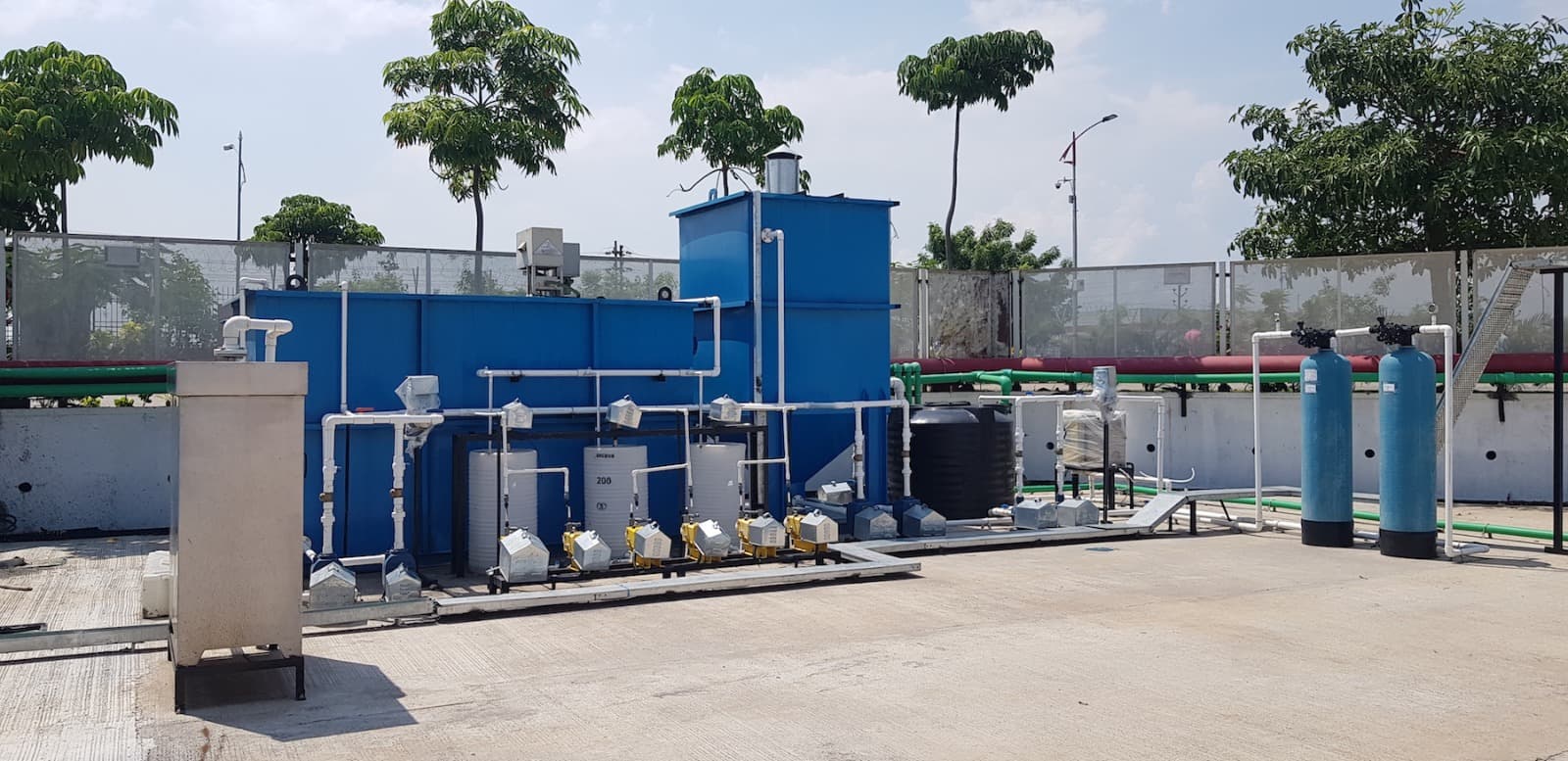
Overview
What is an Effluent Treatment Plant?
An Effluent Treatment Plant, commonly called an ETP, is a treatment system used to remove contaminants from industrial wastewater before reuse, recycling or safe discharge. It treats wastewater generated from process operations, washing, cleaning, utilities, product contact areas and industrial drains. Terraquaer Venture Pvt. Ltd. designs and supplies ETP systems for industrial clients in Ahmedabad, Gujarat and across India.
Why is an ETP Required?
Industries require an ETP to control pollution, meet pollution control board norms, protect receiving water bodies and support treated water reuse where feasible. Untreated industrial effluent may contain high COD, BOD, TSS, TDS, pH variation, oil and grease, color, toxicity, salts, chemicals or process-specific pollutants. An ETP helps reduce these contaminants before discharge or further treatment.
When and Where is an ETP Used?
An ETP is required when industrial wastewater cannot be directly discharged due to organic load, suspended solids, oil and grease, pH imbalance, color, toxicity or other pollutants. It is used in chemical, pharmaceutical, textile, dyes and intermediates, food and beverage, dairy, engineering, automobile, packaging, manufacturing and process industries. ETP systems are also used before industrial RO, water recycling and zero liquid discharge systems.
How an ETP Works
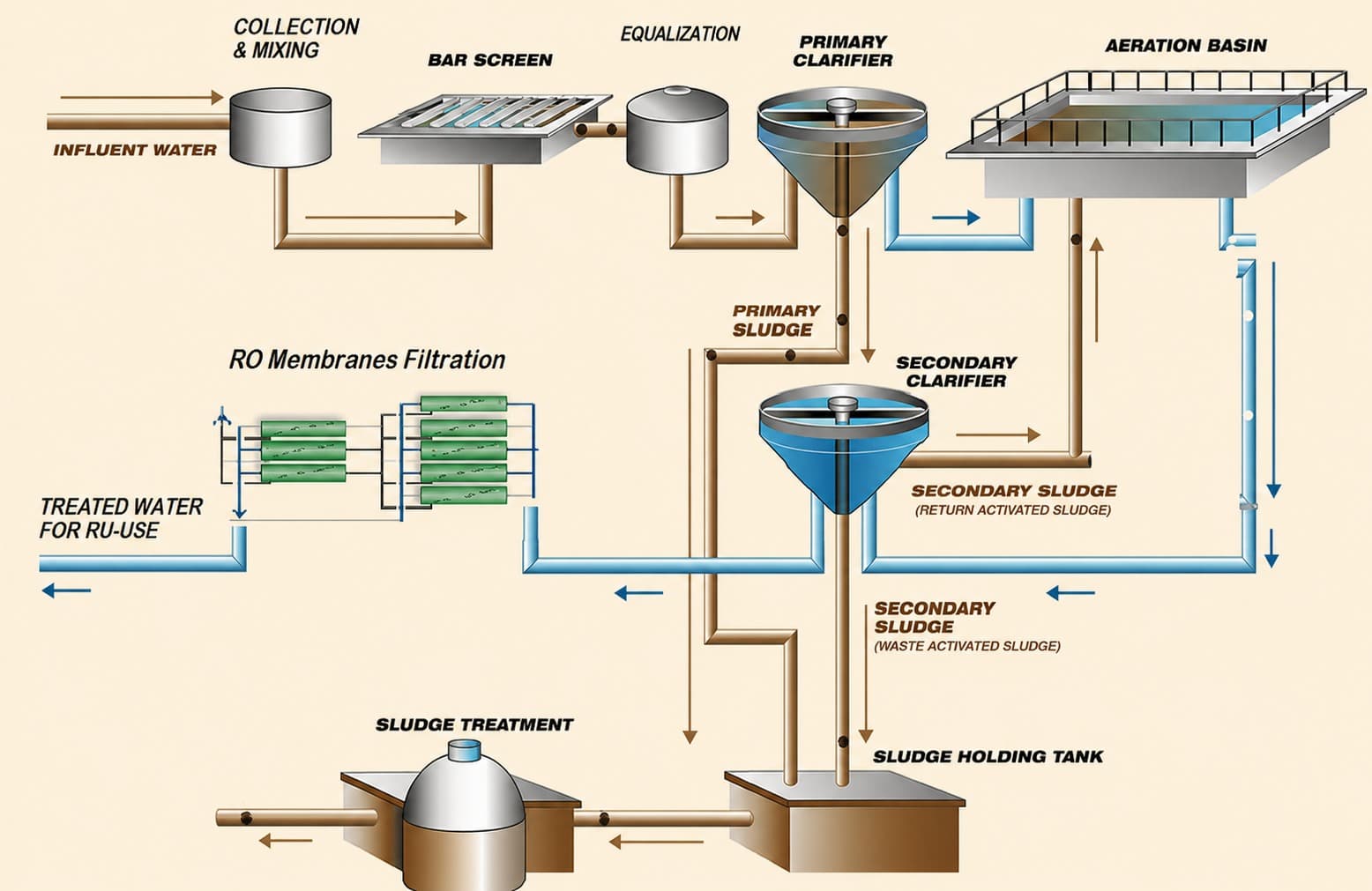
A typical Effluent Treatment Plant works through multiple treatment stages. Equalization balances flow and pollutant load. pH correction neutralizes acidic or alkaline wastewater. Coagulation and flocculation help fine particles combine into larger flocs. Primary settling removes suspended solids. Biological treatment reduces biodegradable organic load such as COD and BOD. Tertiary treatment, filtration and disinfection polish the treated water for reuse or discharge. Sludge dewatering reduces sludge volume for handling and disposal.
Technical Overview and Design Considerations
ETP design depends on actual wastewater characteristics and project requirements. Important inputs include flow rate, inlet parameters, outlet standards, site condition, hydraulic loading, organic loading, COD, BOD, TSS, TDS, pH, oil and grease, hardness, silica, ammonia, chlorides, sulphates, color, toxicity, biological treatability, reuse objective, statutory norms and client-specific requirements. Terraquaer does not assume final design values without wastewater data and treatability understanding.
Major Components and Scope Elements
An ETP may include collection tanks, screens, equalization tanks, mixers, pH correction systems, chemical dosing, flash mixers, flocculators, clarifiers, aeration tanks, MBBR media or activated sludge systems, secondary clarifiers, tertiary filters, activated carbon filters, disinfection systems, sludge pumps, filter press or other sludge dewatering equipment, instruments, electrical panels, PLC/SCADA automation, piping and valves.
Applications and Industries Served
Effluent Treatment Plants are used for industrial wastewater treatment, treated water reuse, recycling, discharge compliance, ETP upgradation and troubleshooting. Terraquaer supports chemical, pharmaceutical, textile, dyes and intermediates, food and beverage, dairy, engineering, automobile, packaging, manufacturing, process, agrochemical, refinery, petroleum, metal, casting, paper and utility industries where wastewater treatment must be matched to site-specific characteristics.
Terraquaer’s Engineering and EPC / EPCC Scope
Terraquaer supports ETP projects through sample-based design, wastewater characterization review, treatability understanding, process selection, detailed engineering, equipment selection, procurement, fabrication coordination, supply, installation, commissioning, automation, troubleshooting, revamping, operation and maintenance, and lifecycle support. The engineering approach is practical and site-specific, with attention to maintainability, operator access, chemical handling, sludge management and long-term operating cost.
Quality, Safety and Compliance Considerations
ETP projects must consider applicable CPCB, SPCB and GPCB requirements, consent conditions, safe chemical storage, operator access, electrical safety, sludge management, instrumentation, sampling points and maintainability. Terraquaer helps clients plan systems that are practical for long-term operation rather than only theoretical design conditions.
Common Challenges and Terraquaer’s Solutions
Common ETP challenges include variable wastewater load, shock loading, high COD, poor biological treatability, foaming, sludge bulking, poor settling, odor, color, oil carryover, filter choking and compliance variation. Terraquaer addresses these through process correction, chemical optimization, hydraulic review, aeration improvement, automation, operator training, troubleshooting and revamping where required.
Terraquaer Legacy and Capability Statement
Terraquaer Venture Pvt. Ltd. supports clients with practical, reliable and maintainable water and wastewater treatment solutions. Terraquaer’s strength lies in understanding actual site conditions, wastewater characteristics, client objectives, compliance requirements, lifecycle cost and long-term operation challenges before recommending a treatment system. As an EPC / EPCC environmental engineering company, Terraquaer helps clients from concept development to commissioning and long-term operation support.
Buyer Decision Guide
Before finalizing an ETP, buyers should review wastewater analysis, average and peak flow, discharge norms, reuse goals, available space, existing drainage, sludge disposal route, automation requirement, power cost, chemical cost and operation capability. Terraquaer helps clients compare process routes and select a maintainable system suitable for actual site conditions.
Final Call to Action
Contact Terraquaer Venture Pvt. Ltd. for sample-based ETP assessment, process design review, turnkey supply, installation, commissioning, automation, troubleshooting, revamping or O&M support for industrial wastewater treatment requirements in Ahmedabad, Gujarat or anywhere in India.
Key features
- Sample-based design and wastewater treatability understanding before process selection
- Covers equalization, pH correction, coagulation, flocculation, settling, biological treatment, tertiary treatment, filtration, disinfection and sludge dewatering
- Suitable for chemical, pharmaceutical, textile, food and beverage, dairy, engineering, automobile, packaging, manufacturing and process industries
- Automation-ready controls for pumps, blowers, dosing systems, instrumentation and monitoring
- Can be configured for discharge compliance, treated water reuse, RO pre-treatment or ZLD integration
- Supports new installations, troubleshooting, revamping, capacity upgrades and O&M
Key outcomes
- Improved treated effluent quality and better compliance control
- Reduced COD, BOD, TSS, oil and grease, color and pH-related risk
- Better readiness for reuse, recycling, RO polishing or ZLD systems where required
- Practical, maintainable system design based on site realities and lifecycle operation
- Single EPC / EPCC partner support from concept to commissioning and long-term operation
Standards & certifications
Final design and outlet targets are aligned with applicable CPCB/SPCB/GPCB norms, consent conditions, reuse objectives and client-specific discharge requirements. Design values are finalized only after reviewing actual wastewater data.
Who it's for
Industrial clients, consultants, developers, factories, plant owners, municipal bodies, institutions and purchase teams requiring reliable treatment of process effluent before reuse or statutory discharge.
Gallery
Related products
Looking for something specific?
Tell us what you need to spec.
Share your capacity, compliance milestone, and timeline. An engineer responds within one business day.