
Industrial Reverse Osmosis (RO) Plants
Industrial RO plants for brackish water, sea water desalination, process water, boiler feed, utility water and reuse applications.
Request a quote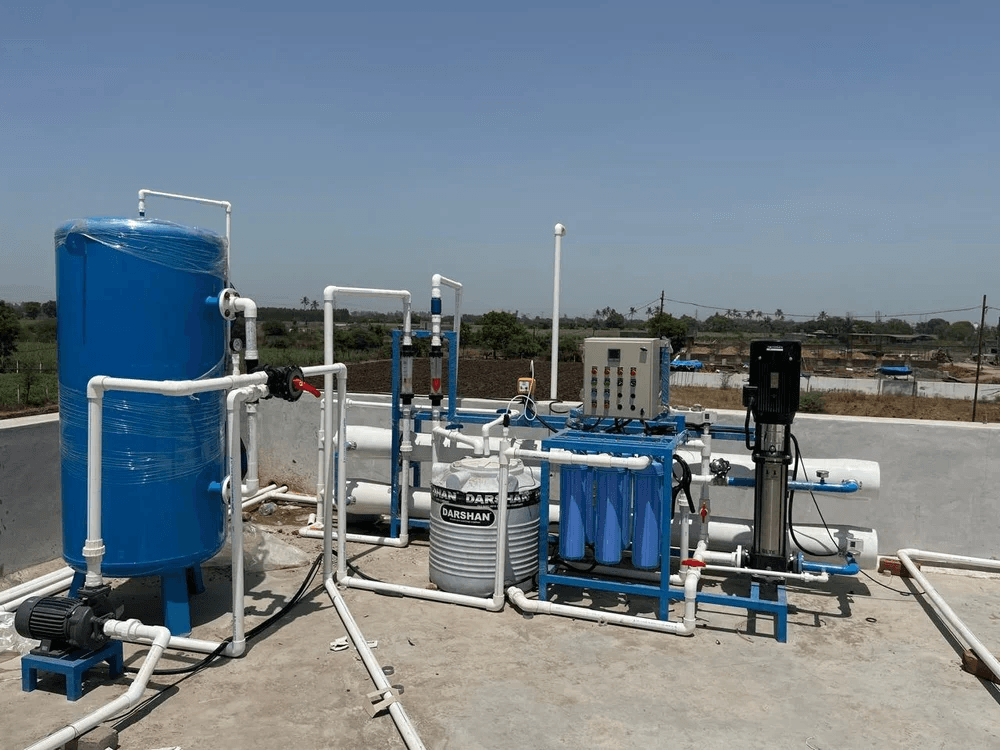
Overview
What is an Industrial Reverse Osmosis Plant?
An Industrial Reverse Osmosis Plant, commonly called an RO plant, is a pressure-driven membrane water treatment system used to reduce dissolved salts, hardness, TDS, silica, heavy metals and other dissolved impurities from water. RO membranes allow treated water, known as permeate, to pass through while concentrating salts and impurities in the reject stream. Terraquaer Venture Pvt. Ltd. designs and supplies industrial RO plants for brackish water, sea water, desalination, process water, boiler feed water, cooling tower makeup, tertiary treated water reuse, drinking water, packaged water and industrial utility applications across Ahmedabad, Gujarat and pan-India locations.
Why is RO Required?
RO is required when dissolved salts, high TDS, hardness, chlorides, sulphates, silica, iron, manganese or other dissolved contaminants make water unsuitable for process use, boiler feed preparation, cooling tower makeup, drinking, packaged water production or reuse. RO helps industries improve water quality, reduce scaling in equipment, protect membranes and polishing systems downstream, and make treated water suitable for specific industrial or non-potable reuse requirements.
When Should an RO Plant Be Selected?
An RO plant should be selected when feed water quality and final water quality requirements indicate that conventional filtration, softening or chemical treatment alone cannot achieve the required TDS, conductivity, hardness or salinity reduction. RO is commonly selected for borewell water, brackish water, sea water desalination, tertiary treated STP or ETP water reuse, boiler feed pretreatment, process water, drinking water and packaged water applications. Final selection depends on water analysis, recovery target, reject disposal route, operating pressure, fouling risk and lifecycle cost.
Where is an Industrial RO Plant Used?
Industrial RO plants are used in pharmaceutical, chemical, textile, food and beverage, dairy, automobile, engineering, power, packaged water, hotels, hospitals, institutions, municipal water supply, industrial parks, process industries and commercial facilities. Applications include process water, low-TDS utility water, boiler feed pretreatment, cooling tower makeup, potable water, packaged drinking water, desalination and reuse of tertiary treated sewage or effluent.
How Does an RO Plant Work?
An RO plant works by first preparing the feed water through pretreatment, then pumping it at controlled pressure through RO membrane elements installed inside pressure vessels. Pretreatment may include media filtration, activated carbon filtration, softening, iron removal, ultrafiltration, antiscalant dosing, pH correction and micron cartridge filtration. The high-pressure pump provides the required membrane operating pressure. Water that passes through the membrane is called permeate. Concentrated water leaving the membrane system is called reject or concentrate. Recovery is the percentage of feed water converted into permeate, and it must be selected carefully to control scaling, fouling and reject volume.
Technical Overview and Design Factors
RO design depends on feed water parameters such as TDS, hardness, silica, SDI, turbidity, chlorine, iron, manganese, organic load, pH, temperature, alkalinity, microbiological risk and suspended solids. Other design factors include treated water quality target, recovery percentage, membrane selection, pressure vessel arrangement, flux rate, operating pressure, antiscalant chemistry, cleaning frequency, CIP system, reject disposal, automation level, available space, power availability and operator capability. Terraquaer does not assume final design values without reviewing actual feed water analysis and site requirements.
Pretreatment, Scaling and Fouling Control
Pretreatment is critical for RO reliability. Turbidity and SDI must be controlled to prevent membrane fouling. Chlorine must be removed where chlorine-sensitive polyamide membranes are used. Hardness and silica must be evaluated to prevent scaling at the selected recovery. Iron and manganese must be removed or controlled to reduce fouling and staining. Organic load and biological activity must be managed to reduce biofouling. Antiscalant dosing, micron cartridge filtration and proper operating pressure help maintain membrane performance and reduce chemical cleaning frequency.
Major Components and Scope Elements
A complete industrial RO plant may include raw water tank, feed pump, pressure sand filter, activated carbon filter, softener or dosing-based scale control, iron removal system, ultrafiltration if required, antiscalant dosing system, SMBS or dechlorination dosing where applicable, micron cartridge filter, high-pressure pump, RO membrane elements, pressure vessels, skid frame, permeate and reject piping, flow meters, pressure gauges, conductivity or TDS meters, pH/ORP instruments, CIP system, flushing system, electrical panel, PLC/SCADA or IoT automation, permeate storage and reject handling arrangement.
RO Plant Types and Customization Options
Terraquaer can configure brackish water RO, sea water RO, desalination RO, single-pass RO, double-pass RO, high-recovery RO, packaged RO, skid-mounted RO, containerized RO, process water RO, boiler feed RO, cooling tower makeup RO, packaged drinking water RO and tertiary treated water reuse RO. Systems can be supplied from compact commercial capacities to KLD, MLD and multi-MLD engineered plants depending on flow, water quality and project objectives.
Operation, CIP and Maintenance Requirements
RO operation requires routine monitoring of feed pressure, differential pressure, permeate flow, reject flow, recovery, conductivity or TDS, pH, cartridge filter pressure drop, dosing system performance and membrane trends. CIP, or clean-in-place chemical cleaning, is required when membranes show signs of scaling, fouling, pressure rise, flow reduction or salt passage increase. Terraquaer supports chemical cleaning, membrane performance review, troubleshooting, antiscalant optimization, cartridge replacement planning and O&M support.
Terraquaer’s Engineering and EPC / EPCC Scope
Terraquaer supports RO projects through water analysis review, RO process design, pretreatment selection, membrane selection, recovery calculation, reject disposal planning, skid engineering, equipment selection, procurement, fabrication coordination, supply, installation, commissioning, automation, operator training, chemical cleaning, troubleshooting, revamping, operation and maintenance, and lifecycle support. Terraquaer’s engineering approach focuses on stable performance, maintainability, membrane protection, practical automation and long-term operating cost.
Terraquaer Legacy and Capability Statement
Terraquaer Venture Pvt. Ltd. supports clients with practical, reliable and maintainable water and wastewater treatment solutions. Terraquaer’s strength lies in understanding actual site conditions, wastewater characteristics, client objectives, compliance requirements, lifecycle cost and long-term operation challenges before recommending a treatment system. As an EPC / EPCC environmental engineering company, Terraquaer helps clients from concept development to commissioning and long-term operation support.
Buyer Decision Guide
Before selecting an industrial RO plant, clients should review feed water analysis, TDS reduction requirement, permeate quality target, daily demand, operating hours, recovery target, reject disposal route, pretreatment requirement, automation preference, available space, power cost, chemical cost, membrane replacement cost and O&M capability. Terraquaer helps compare process options and select a maintainable RO configuration suitable for actual water quality and site conditions.
Final Call to Action
Contact Terraquaer Venture Pvt. Ltd. for industrial RO plant design, pretreatment selection, membrane selection, skid engineering, turnkey supply, installation, commissioning, automation, chemical cleaning, troubleshooting, revamping or O&M support for brackish water, sea water desalination, process water, boiler feed, cooling tower makeup, drinking water, packaged water or reuse applications in Ahmedabad, Gujarat and across India.
Key features
- Industrial RO systems for brackish water, sea water, desalination, process water, boiler feed, cooling tower makeup, drinking water, packaged water and tertiary treated water reuse
- Pretreatment selection for turbidity, SDI, hardness, silica, chlorine, iron, manganese, organic load, scaling risk and fouling risk
- Includes micron cartridge filtration, high-pressure pump, RO membranes, pressure vessels, antiscalant dosing, CIP provision, instruments and automation
- Available as skid-mounted, packaged, modular, containerized, single-pass, double-pass, brackish water RO, seawater RO and high-recovery RO configurations
- Automation options include manual, semi-automatic, PLC controlled, PLC-SCADA and IoT-enabled operation
- Supports installation, commissioning, chemical cleaning, troubleshooting, revamping, membrane replacement and O&M
Key outcomes
- Reduced TDS, hardness, salinity and dissolved impurities for process, drinking, utility and reuse applications
- Improved protection for boilers, cooling towers, production processes and downstream polishing systems
- Better RO reliability through suitable pretreatment, antiscalant dosing, membrane selection and fouling control
- Clear management of permeate quality, reject stream, recovery percentage, operating pressure and CIP needs
- Single EPC / EPCC partner support from water analysis and design to commissioning and lifecycle O&M
Standards & certifications
Final RO design depends on feed water analysis, treated water quality requirement, application, recovery target, reject disposal method, statutory norms and client-specific operating conditions. Relevant references may include BIS/IS practices, CPCB/SPCB reuse conditions, OEM membrane guidelines and project specifications.
Who it's for
Industrial clients, consultants, developers, institutions, factories, process plants, utilities, hotels, hospitals, packaged water units, municipal bodies and purchase teams requiring reliable RO-based water treatment for process, drinking, reuse or utility applications.
Looking for something specific?
Tell us what you need to spec.
Share your capacity, compliance milestone, and timeline. An engineer responds within one business day.