
Clarifier System by Terraquaer Venture Pvt. Ltd.
Clarifier systems for gravity settling, sludge collection and clarified water separation in STP, ETP and water treatment applications.
Request a quote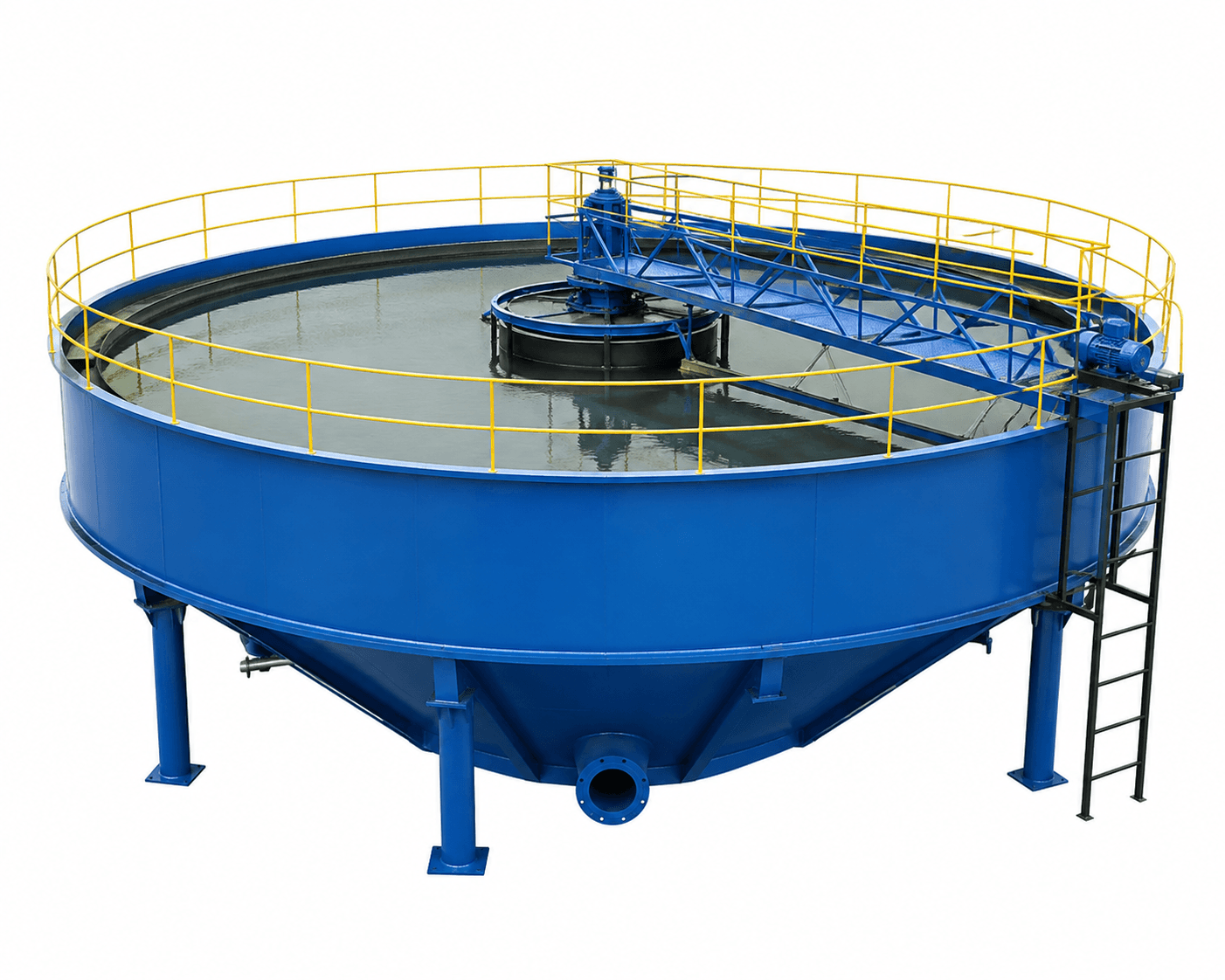
Overview
What is a Clarifier System?
A Clarifier System is a solids-liquid separation unit used in water and wastewater treatment to separate settleable solids, chemical flocs or biological sludge from water by gravity settling. Clarified water overflows from the top while settled sludge is collected and withdrawn from the bottom. Terraquaer Venture Pvt. Ltd. designs and supplies clarifier systems for STP, ETP, WTP, primary treatment, biological treatment, chemical treatment and tertiary clarification applications across Ahmedabad, Gujarat and pan-India projects.
Why is a Clarifier Required?
A clarifier is required when suspended solids, biological sludge or chemically formed flocs must be separated before further treatment, reuse or discharge. In primary treatment, clarifiers reduce settleable solids and sludge load. In biological treatment, secondary clarifiers separate activated sludge from treated water. In chemical treatment, clarifiers settle coagulated and flocculated solids. In tertiary clarification, they help polish water before filtration, disinfection or reuse.
When is a Clarifier Used?
A clarifier is used when process water or wastewater contains settleable suspended solids after screening, equalization, coagulation, flocculation, biological aeration or chemical reaction. It is selected in STPs, ETPs and WTPs when gravity separation is practical and solids settling characteristics support clarification. Clarifier type is selected based on flow, solids load, footprint, sludge characteristics, hydraulic profile and required outlet quality.
Where is a Clarifier Installed?
Clarifiers are installed in sewage treatment plants, effluent treatment plants, water treatment plants, chemical precipitation systems, biological treatment systems, industrial wastewater plants, municipal treatment plants and tertiary treatment systems. They may be placed after coagulation-flocculation, after aeration tanks, after primary screening and grit removal, or before filtration and disinfection depending on process design.
How Does a Clarifier Work?
A clarifier works by reducing water velocity so suspended solids can settle under gravity. Influent enters through an inlet arrangement designed to reduce turbulence and distribute flow. Solids settle to the bottom as sludge, while clarified water rises and overflows through launders or weirs. Sludge is collected in a hopper or scraped toward a sludge pit using a scraper mechanism where applicable. Sludge is withdrawn periodically or continuously for further thickening, dewatering or recirculation depending on the process.
Types of Clarifier Systems
Primary clarifiers are used before biological treatment to remove settleable solids and reduce organic load. Secondary clarifiers are used after biological treatment to separate biomass from treated water and return sludge where required. Tube settlers use inclined tubes to increase settling area in compact space. Lamella clarifiers use inclined plates for high-rate settling and compact clarification. Settling tanks are simple gravity tanks used for solids settlement in small or process-specific applications. Circular clarifiers, rectangular clarifiers, hopper-bottom clarifiers and packaged clarifiers can be selected based on flow, footprint and sludge handling needs.
Technical Overview and Design Factors
Clarifier design depends on average flow, peak flow, surface overflow rate, solids loading rate, weir loading rate, detention time, sludge volume, sludge settleability, sludge blanket depth, tank geometry, inlet energy dissipation, outlet launder design, scraper mechanism, sludge withdrawal rate, return sludge requirement, hydraulic profile, civil constraints and downstream treatment needs. Terraquaer does not assume final design values without reviewing flow, solids characteristics, process stage and site conditions.
Gravity Settling, Overflow and Sludge Withdrawal
Gravity settling requires calm hydraulic conditions and sufficient settling area. Clarified water must overflow evenly to avoid short-circuiting and solids carryover. Sludge collection must match sludge type and volume. Primary sludge, chemical sludge and biological sludge behave differently, so sludge withdrawal frequency, pump selection, hopper slope, scraper mechanism and return sludge arrangement must be selected carefully. Poor sludge removal can cause septic conditions, floating sludge, odor and outlet quality deterioration.
Major Components and Scope Elements
A clarifier system may include civil or fabricated tank, inlet chamber, feed well, energy dissipation arrangement, launder, V-notch weir, scum baffle, sludge hopper, sludge collection mechanism, scraper bridge, drive unit, sludge withdrawal piping, sludge pump, return sludge line where required, tube settler media, lamella plates, access platform, handrails, valves, instruments and integration with sludge handling or downstream filtration systems.
Applications in Primary, Biological, Chemical and Tertiary Treatment
In primary treatment, clarifiers remove settleable solids before biological treatment. In biological treatment, secondary clarifiers separate biomass and help maintain sludge inventory. In chemical treatment, clarifiers settle coagulated and flocculated solids from ETP or WTP processes. In tertiary clarification, tube settlers or lamella clarifiers can improve water clarity before pressure sand filters, dual media filters, activated carbon filters, disinfection, RO, reuse or discharge.
Operation and Maintenance Requirements
Clarifier operation requires monitoring of inlet flow, sludge blanket, outlet clarity, weir overflow, sludge withdrawal, scraper operation, floating sludge, scum, chemical dose response and downstream turbidity. Maintenance includes checking scraper drive, bridge alignment, sludge pumps, valves, launders, tube settler or lamella fouling, corrosion, civil leakage and safety access. Regular sludge removal and hydraulic balance are important for stable clarification.
Terraquaer’s Engineering and EPC / EPCC Scope
Terraquaer supports clarifier projects through process review, hydraulic design, surface overflow rate selection, solids loading review, sludge handling planning, civil tank sizing, mechanical scraper selection, tube settler or lamella selection, inlet/outlet design, sludge withdrawal design, equipment selection, procurement, fabrication coordination, installation, commissioning, troubleshooting and O&M support. Terraquaer’s approach focuses on practical hydraulics, sludge manageability, civil/mechanical integration and long-term maintainability.
Terraquaer Legacy and Capability Statement
Terraquaer Venture Pvt. Ltd. supports clients with practical, reliable and maintainable water and wastewater treatment solutions. Terraquaer’s strength lies in understanding actual site conditions, wastewater characteristics, client objectives, compliance requirements, lifecycle cost and long-term operation challenges before recommending a treatment system. As an EPC / EPCC environmental engineering company, Terraquaer helps clients from concept development to commissioning and long-term operation support.
Buyer Decision Guide
Before selecting a clarifier system, buyers should review flow rate, peak factor, TSS, sludge type, sludge settleability, chemical treatment requirement, biological process needs, available footprint, hydraulic profile, civil construction possibility, sludge handling route, scraper requirement, tube settler or lamella need, outlet clarity target and O&M capability. Terraquaer helps clients select a clarifier type that suits the process and site conditions.
Final Call to Action
Contact Terraquaer Venture Pvt. Ltd. for clarifier hydraulic design, surface overflow rate selection, tube settler or lamella selection, sludge handling planning, civil/mechanical integration, installation, commissioning, troubleshooting and O&M support for STP, ETP, WTP and industrial wastewater treatment projects in Ahmedabad, Gujarat and across India.
Key features
- Covers primary clarifiers, secondary clarifiers, tube settlers, lamella clarifiers and settling tanks for STP and ETP applications
- Uses gravity settling to separate suspended solids, chemical flocs or biological sludge from water
- Includes clarified water overflow, sludge collection, sludge withdrawal and scraper mechanism where applicable
- Supports primary treatment, biological treatment, chemical treatment and tertiary clarification
- Designed around hydraulic loading, surface overflow rate, solids loading, weir loading and sludge handling needs
- Terraquaer supports hydraulic design, SOR selection, sludge handling, civil/mechanical integration, installation and commissioning
Key outcomes
- Improved solids-liquid separation before filtration, disinfection, reuse, discharge or downstream treatment
- Better sludge collection and controlled withdrawal from STP, ETP and WTP processes
- Reduced carryover of suspended solids where hydraulic and solids loading are correctly designed
- Flexible clarifier options for compact packaged systems, civil tanks and high-rate settling applications
- Single EPC / EPCC support from process design and equipment selection to commissioning and troubleshooting
Standards & certifications
Final clarifier design depends on flow rate, peak flow, solids loading, sludge settleability, surface overflow rate, weir loading, detention time, sludge blanket control, scraper requirement, sludge withdrawal rate, civil tank geometry, hydraulic profile and outlet quality requirement.
Who it's for
STP, ETP, WTP, industrial wastewater, municipal wastewater, chemical treatment, biological treatment and tertiary clarification projects requiring reliable solids-liquid separation, sludge handling and clarified water overflow control.
Looking for something specific?
Tell us what you need to spec.
Share your capacity, compliance milestone, and timeline. An engineer responds within one business day.