Cooling Tower Blowdown Treatment and Reuse: Cycles, Chemistry and Control

Cooling-tower blowdown is a water-balance and chemistry problem—not simply a drain stream.
Cooling towers concentrate the dissolved minerals, alkalinity, silica, suspended solids and treatment residues left behind as water evaporates. Blowdown controls that concentration, but excessive bleed wastes make-up water and sends a higher-salt stream to the ETP. Reliable savings come from treating the complete system: make-up quality, recirculating-water chemistry, dosing, control logic, metering and the final path for blowdown.
Start with the water balance and cycles of concentration
At steady state, make-up water replaces evaporation, blowdown and drift/losses. A useful first indicator is cycles of concentration (CoC): the ratio of a representative dissolved constituent—or conductivity—in recirculating or blowdown water to the same value in make-up water. With negligible drift and leaks, blowdown is approximately evaporation divided by CoC minus one. Raising CoC can lower water use, but a higher number is not automatically better: scale, corrosion, microbiological risk, metallurgy and downstream discharge limits determine the safe operating window.
Measure the chemistry before changing the blowdown set point
Collect representative make-up, recirculating-water and blowdown samples during normal load and upset conditions. Review conductivity, pH, total hardness, calcium, magnesium, alkalinity, chloride, sulphate, silica, iron, turbidity, TSS, oil and grease where relevant, microbiological indicators and the active treatment programme. Evaluate cooling load, heat exchangers, metallurgy, existing filtration, dosing points and chemical safety arrangements alongside laboratory data.
Compare conductivity-based cycles with metered make-up-to-blowdown ratio; a mismatch can expose leaks, unmetered draws, faulty valves or instrument error.
Trend each limiting constituent, not conductivity alone. Conductivity is a control surrogate; it does not reveal every scale, corrosion or biological-fouling risk.
Use site-specific limits agreed with the water-treatment specialist, equipment suppliers and applicable consent conditions.
Choose treatment around the actual limiting mechanism
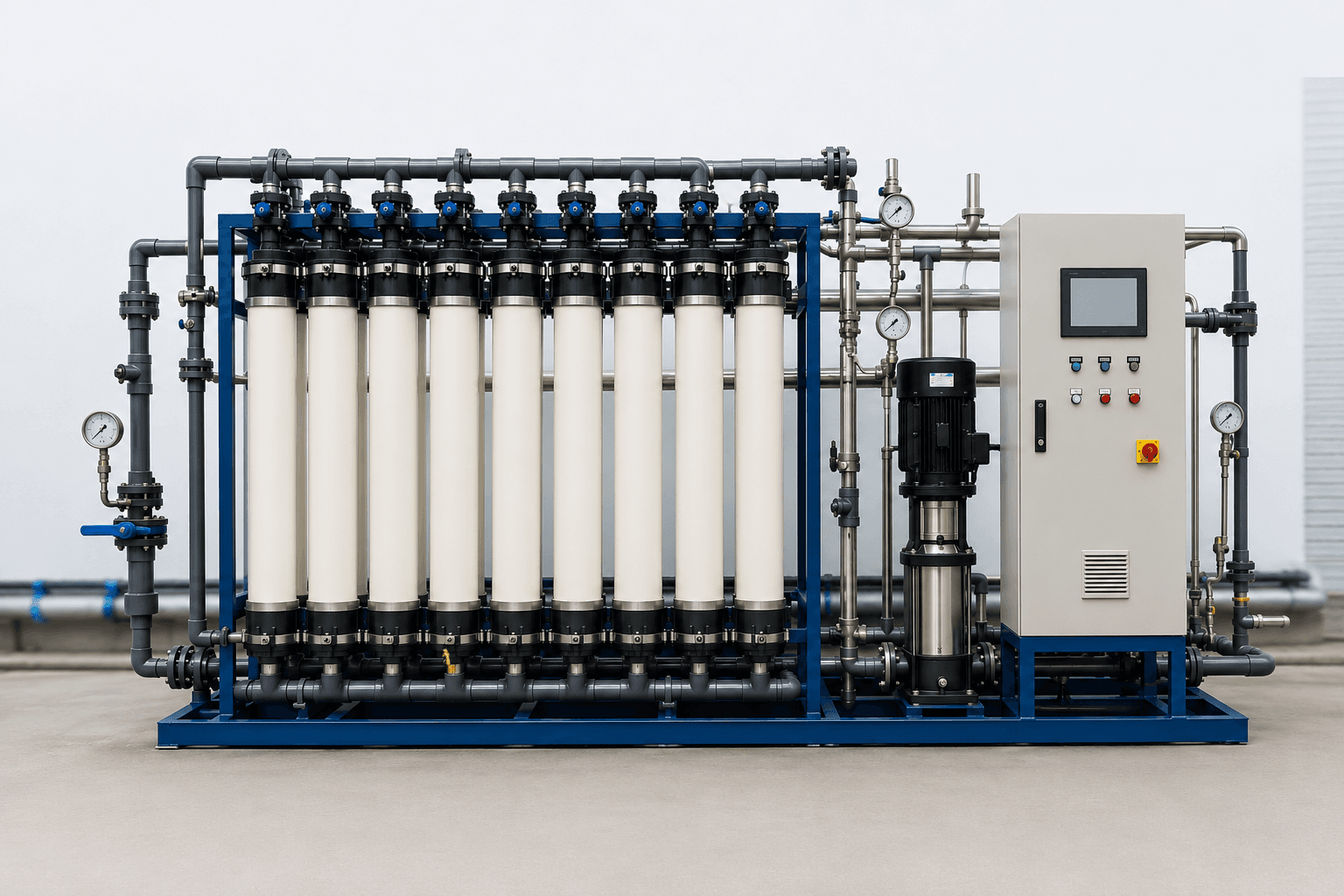
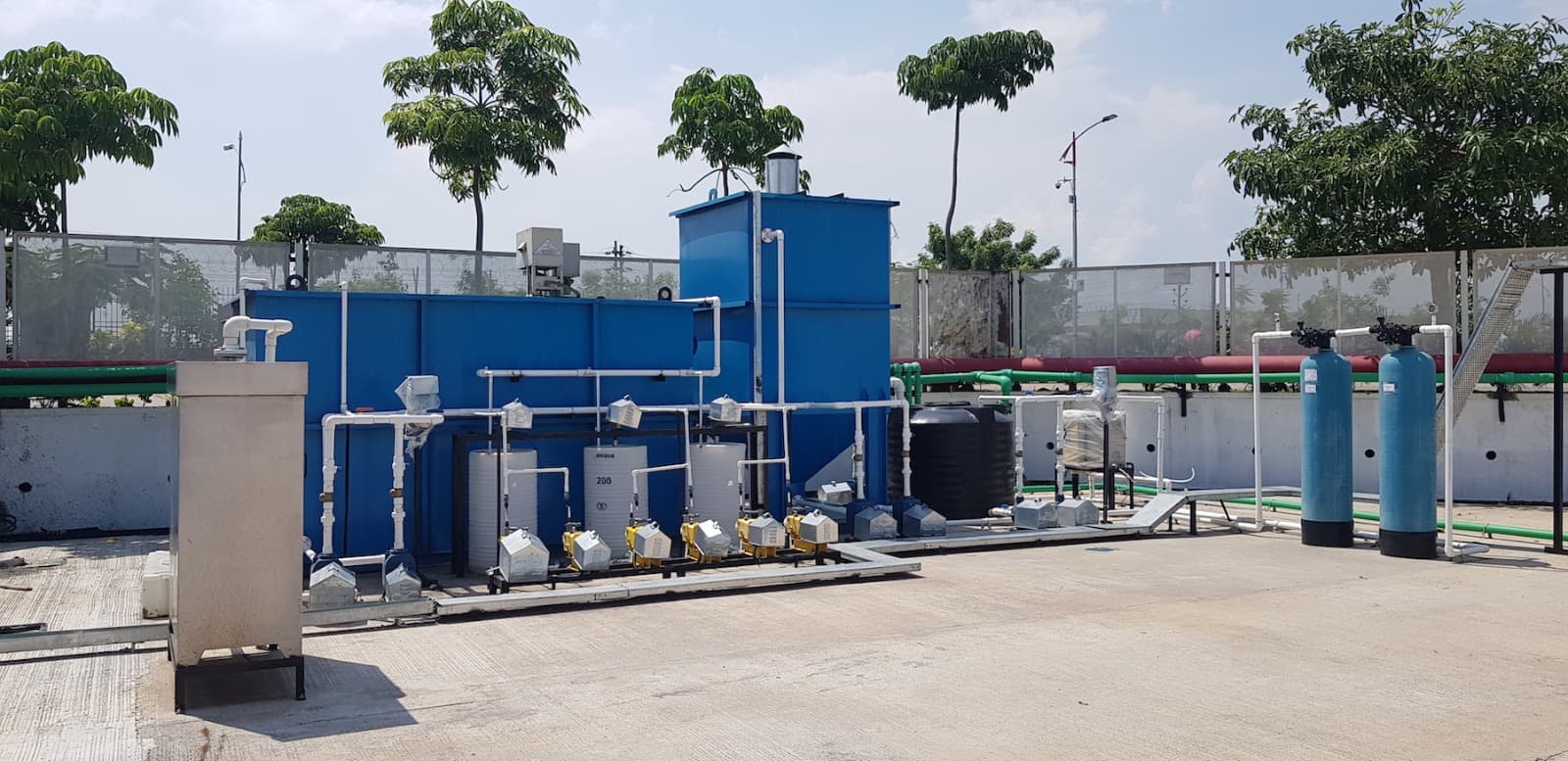
Hardness, alkalinity and silica can constrain concentration through scale; chloride, sulphate, pH and oxidant control can affect corrosion; suspended solids and biological growth can foul heat-transfer surfaces. A fit-for-purpose train may include prefiltration or side-stream filtration for solids, softening or RO for make-up conditioning, chemical dosing for scale/corrosion and microbiological control, and automatic conductivity-guided blowdown. The correct combination depends on water analysis and equipment compatibility—generic chemical recipes or cycles targets should not be transferred from another site.
Design a blowdown control loop that operators can trust
A conductivity controller should be installed, calibrated and checked against a portable meter. Setpoints should be derived from the approved chemistry envelope, with interlocks and alarm response defined before operation. Meter make-up and blowdown independently; record daily volumes, conductivity, pH, chemical consumption, CoC, corrosion/scale observations and deviations. Routine review turns water-efficiency work into an O&M discipline instead of a one-time setpoint change.
Treat or reuse blowdown only after a compatibility assessment
Cooling-tower blowdown may be suitable for selected internal uses or for return to an ETP, but its elevated salts, residual biocides/inhibitors, metals, oil ingress and microbiological condition must be assessed first. Check the receiving process, biological-treatment tolerance, hydraulic peak, salt balance, sludge impact and discharge or reuse requirement. Segregate incompatible chemical cleaning streams, and do not mix concentrated streams into a recycle loop without a documented water and mass balance.
A practical upgrade sequence
Establish a baseline for make-up, blowdown, cycles, chemistry, chemical consumption and heat-transfer or maintenance symptoms.
Fix uncontrolled losses, failed level valves, inaccurate instruments and poor dosing-point mixing before pursuing higher cycles.
Pilot or model make-up conditioning, side-stream filtration or treatment-program changes against the actual chemistry.
Implement revised setpoints gradually with trend review, inspection and contingency limits.
Update SOPs, calibration schedules, safety controls and the ETP/reuse water balance after the change.
How Terraquaer supports cooling-water projects
Terraquaer can assess cooling-water and blowdown management as an integrated utility-water project: source-water characterization, softener/filtration/RO selection where justified, chemical-dosing and instrumentation design, ETP interface, reuse feasibility, automation, commissioning and operator-led O&M. This EPC/EPCC and O&M approach helps balance water saving with plant reliability, material protection and documented compliance.
The enquiry checklist
For a design review, prepare at least three months of make-up and blowdown data where available; laboratory analysis of make-up, tower water and blowdown; cooling load and recirculation flow; existing setpoints and chemical programme; equipment metallurgy; P&IDs; meter history; ETP capacity and inlet-quality trend; target water saving; and site-specific consent or reuse conditions. These inputs enable a defensible treatment and controls proposal.